
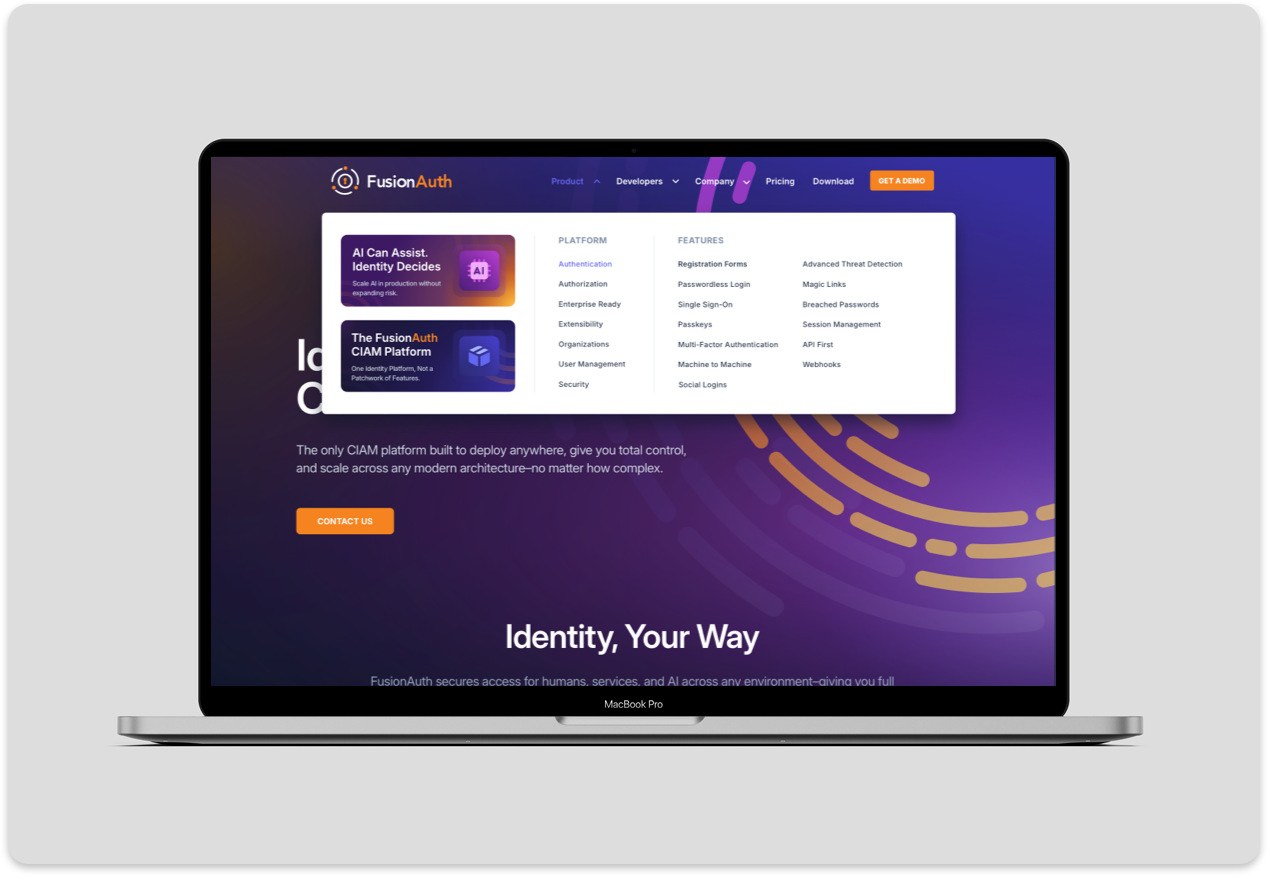
What existed before was not a marketing asset. It was an engineering artifact. The site ran in a markup environment that only the engineers who built it could touch. No design team existed. No brand system. Stock assets pulled from paid repositories and dropped in as placeholders. Marketing could not build a landing page, update a page for SEO, or run a campaign without filing a request and waiting for an engineer to execute it.
The first order of business was infrastructure. The site was migrated from the engineering-controlled environment into Webflow in two months, handing the marketing team a system they could actually operate. That build created the foundation. What it could not do in the time available was address the brand — which had none.
Two years in, with a real understanding of the product and the CIAM market, the second project began. This one was the full redesign. No CMO. The roadmap was built from scratch, the project management system created in Linear, every page scoped with its content requirements and asset needs documented before a single design was opened. Team meetings scheduled and run. Mockup reviews managed through full iteration cycles. Copy coordinated with the in-house writer. Day-to-day operations maintained throughout.
Typography, color, and copy were rebuilt across every published page. The backend SEO infrastructure finally got the attention it needed. The sitemap was moved out of Webflow — the platform was indexing environments it had no business indexing — and managed directly for CDN control and granularity. Robots.txt managed. Every old URL audited, redirects corrected, no pages lost in the migration.
The entire Webflow environment was built by hand. Every design implemented, tested for responsiveness, and checked for structural correctness. For the first time, a design system was established and documented — branded assets, icons, marketing materials, and more organized into a reference the entire company could leverage and build from consistently. No more pulling from stock repositories. The brand finally had a foundation.
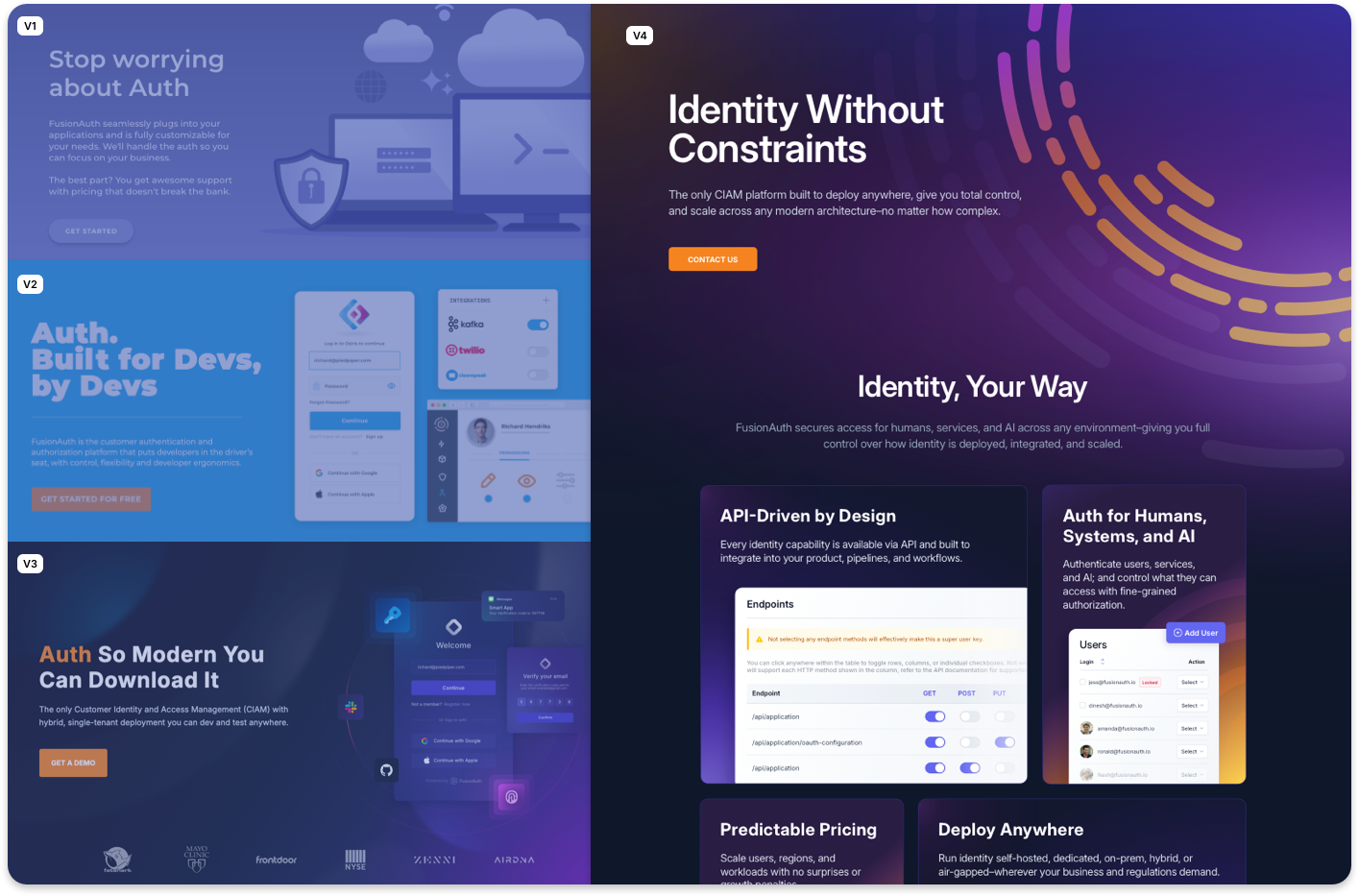
The documentation site inherited at the start was built on a custom Docusaurus environment. It worked, technically. What it did not do was work for people. New hires, incoming engineers, and developers trying to integrate with FusionAuth's product all hit the same wall — the system was difficult to navigate, difficult to contribute to, and difficult to understand without already knowing how it had been built. For a developer-first company, that was a problem that went beyond aesthetics.
The decision was made to migrate to Astro. Before any design work began, time was invested understanding the framework from the inside — how it handled content, how pages were structured, how the system could be built to scale. That foundation informed everything that followed.
The design work ran in tandem with the marketing site redesign. A style guide and UI documentation were built specifically for the new docs environment, bringing the updated branding and visual language from fusionauth.io into the documentation experience. For the first time, both properties felt like they came from the same company. Tailwind CSS was woven into the front-end implementation, and page templates were built to be reused and scaled — the same system thinking that drove the design system on the marketing side applied here at the code level.
Getting this done required getting into GitHub directly, working with the codebase, and building with the same hands-on approach applied to everything else. The result was a documentation environment that developers could navigate quickly, contribute to without friction, and trust visually.
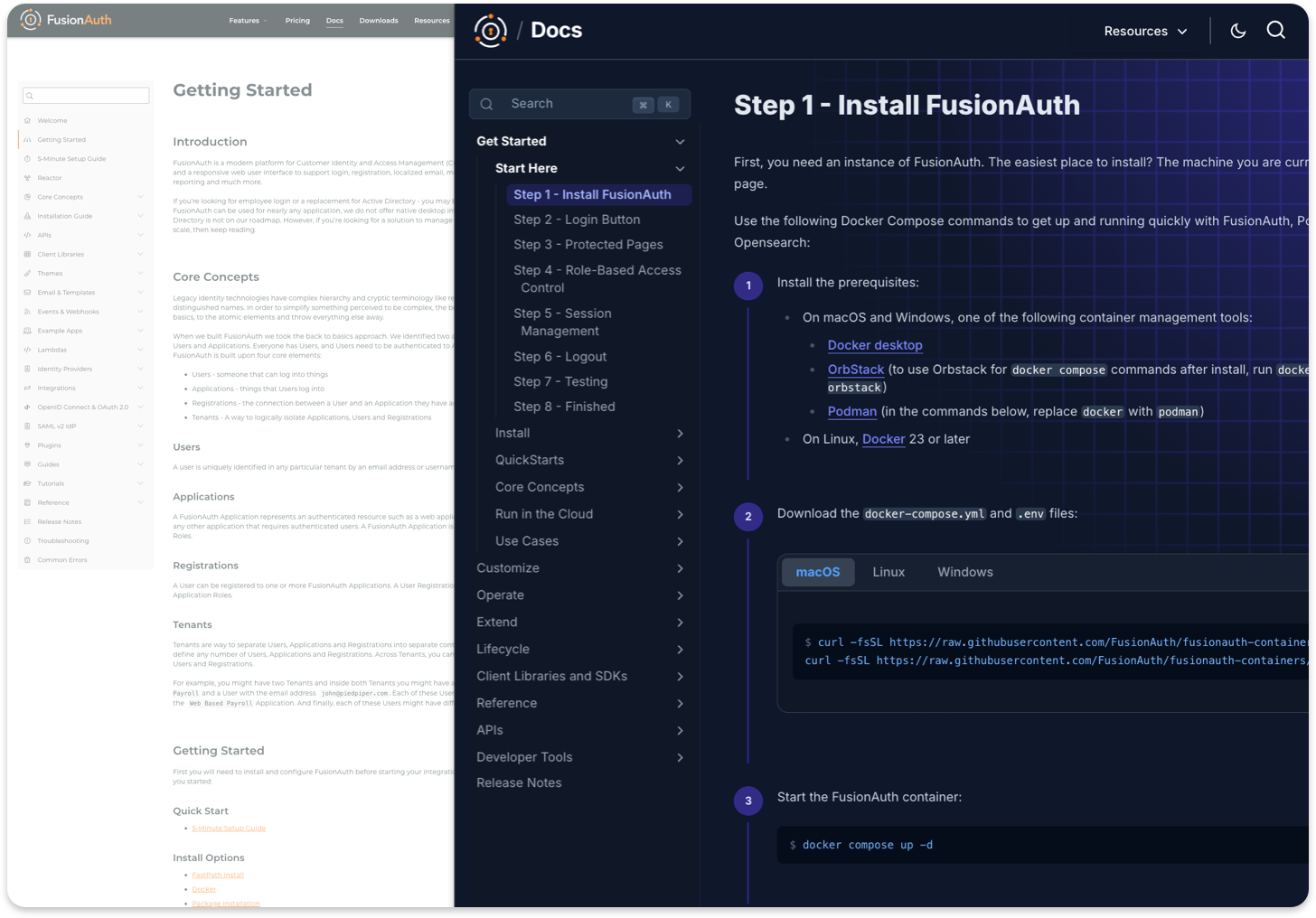
The blog had been sitting on a Docusaurus backend that had not kept pace with anything — not the brand, not the product, and not the audience. SEO had never been properly addressed. The visual design was outdated. And for a company whose readers are developers and engineers by default, outdated is not just an aesthetic problem. It is a credibility problem.
The approach started with the audience. Developers and engineers read content differently and evaluate the platforms they read it on. Rather than defaulting to a standard marketing blog format, the design process looked at how developer-first companies build their own content experiences — the structure, the hierarchy, the restraint — and used that as the reference point. The goal was a blog that felt native to the people reading it.
UI mockups were designed first, then built out in Tailwind CSS. The implementation was not handed off. Working directly with the engineering team, a custom CMS was built from the design up — structured to be statically clean, scalable, and aligned with the brand that had just been established across the marketing site and documentation. Backend SEO was rebuilt properly from scratch, addressing what the previous version had never touched.
The outcome was the third piece of a coherent brand. Marketing site, documentation, blog — all three properties finally reading as one company. Getting there required the kind of collaboration with engineering that only works when design understands the technical requirements on the other side of the table. That was never the obstacle here.
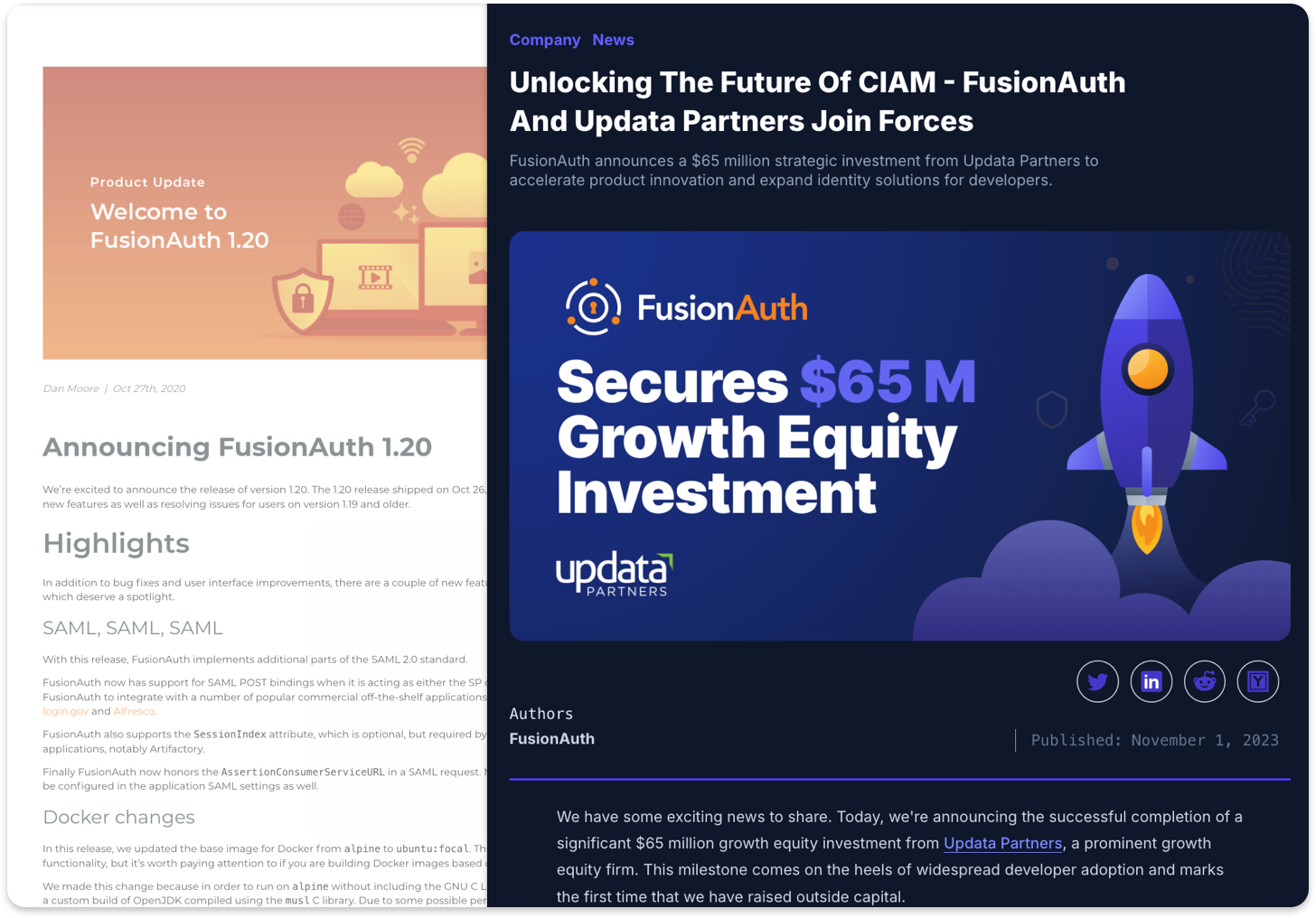



Beautiful design has the power to captivate audiences.
